7 Symptoms of a Failing Clutch Master Cylinder You Must Not Ignore
Oct 10, 2026
7 Symptoms of a Failing Clutch Master Cylinder You Must Not Ignore
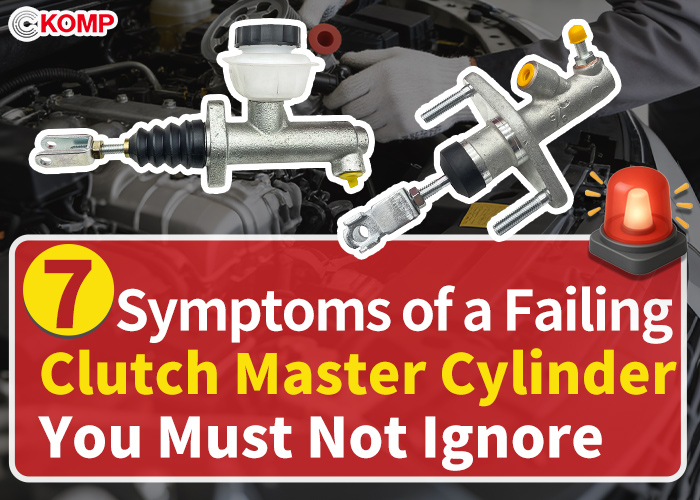
With time, ageing internal rubber seals, corrosion and contaminated fluid damage the cylinder. A failing clutch master cylinder rarely fails completely overnight. It sends clear warning signs long before total breakdown. Ignoring these symptoms may result in stuck gears, sudden vehicle stalling and hazardous driving conditions. Below are seven critical warning signs you should never overlook.
1. Spongy or Soft Clutch Pedal
This is the earliest and most common warning sign. A healthy clutch pedal provides steady, firm resistance. When the master cylinder’s internal seals degrade, fluid bypasses the piston or air enters the hydraulic circuit. The pedal feels mushy and lacks solid feedback when pressed. Many technicians bleed the clutch line first, but if the spongy feeling returns quickly, worn seals inside the clutch master cylinder are the real root cause.
2. Clutch Pedal Gradually Sinks to the Floor
If the clutch pedal slowly drifts downward when held without extra force, this indicates internal leakage within the master cylinder. Fluid slips past the piston internally, so the system cannot maintain stable hydraulic pressure. Unlike external leaks, this internal leakage often leaves no visible fluid puddles. Many drivers miss this danger, yet the fault will worsen rapidly. Long-distance driving under this condition is not recommended.
3. Difficulty Shifting Gears or Gear Grinding
A functional clutch master cylinder generates enough pressure to fully disengage the clutch. Insufficient pressure stops the clutch from fully separating from the flywheel. You will struggle to shift into first gear or reverse, and hear grinding sounds during gear changes. This symptom is frequently mistaken for a worn clutch disc. Always inspect the hydraulic master and slave cylinder before replacing the whole clutch assembly to avoid unnecessary repair expenses.
4. Continuously Low Clutch Hydraulic Fluid Level
Check the reservoir connected to your clutch master cylinder. Repeatedly dropping fluid levels point to a leak in the hydraulic circuit. Two leak types exist: external leaks leave wet marks on the firewall or under dashboard carpet; internal leaks send fluid into the cylinder’s rear chamber with no visible wet traces. Topping up fluid only offers temporary relief and cannot fix a damaged master cylinder.
5. Dark and Contaminated Clutch Fluid
Fresh clutch hydraulic fluid is clear or pale amber. Dark brown or black fluid with tiny particles means rubber seal debris has polluted the fluid. Broken-down seals inside the clutch master cylinder release rubber fragments into the hydraulic circuit. Dirty fluid accelerates wear of the master cylinder, slave cylinder and pipelines. Simply flushing fluid cannot repair a worn master cylinder.
6. Slow or Incomplete Clutch Pedal Return
After releasing your foot, the pedal stays down or creeps back slowly instead of snapping back to its resting position. Swollen internal seals or blocked compensation ports inside the master cylinder prevent the piston from resetting properly. The clutch may remain partially disengaged, triggering clutch slip and transmission damage.
7. Temporary Fix by Pumping the Clutch Pedal
Pumping the clutch pedal repeatedly temporarily restores firm pedal feel and normal gear shifting, but the problem recurs shortly afterward. This is a classic sign of internal seal failure. Pumping builds temporary pressure, yet worn seals cannot hold pressure steadily. This intermittent fault is easy to misdiagnose.
Quick Diagnostic Tip
Block the outlet line of the clutch master cylinder and hold the pedal pressed. A firm pedal means the master cylinder works well; a slowly sinking pedal confirms internal seal failure and requires replacement. When replacing the master cylinder, inspect the clutch slave cylinder as they often wear out together. Flush old fluid and bleed the entire hydraulic system after installation.
Why Choose High-Quality Aftermarket Clutch Master Cylinders
Low-cost aftermarket units use inferior raw materials. Their seals degrade quickly, causing repeated leakage and early failure. As a professional clutch master cylinder manufacturer, we produce reliable KOMP brand clutch master cylinders. Our IATF16949-certified units adopt OEM-grade wear-resistant raw materials, precision-honed bores and high-performance seals for leak resistance and extended service life.
As a trusted clutch master cylinder factory, we supply over 9,000 part numbers covering American, Japanese, Korean and European heavy-duty trucks, construction and agricultural machinery. We specialize in durable aftermarket clutch master cylinder solutions. OEM & ODM services, custom packaging and free laser marking are available for global partners.
Safety Reminder
Do not drive the vehicle if the clutch pedal sinks to the floor or gears cannot be engaged. Sudden loss of clutch control may cause traffic accidents. Replace the defective clutch master cylinder immediately.