


what are you looking for?
In a heavy-duty truck, bus, or trailer air brake system, the foot brake valve — also called a treadle valve or application valve — is the driver's direct command point. It converts mechanical pedal effort into a proportional air-pressure signal that controls the service brakes. Knowing its components helps technicians diagnose leaks, slow release, poor graduation, and imbalance, and gives buyers comparing a foot brake valve supplier or foot brake valve wholesaler a basis to judge quality.
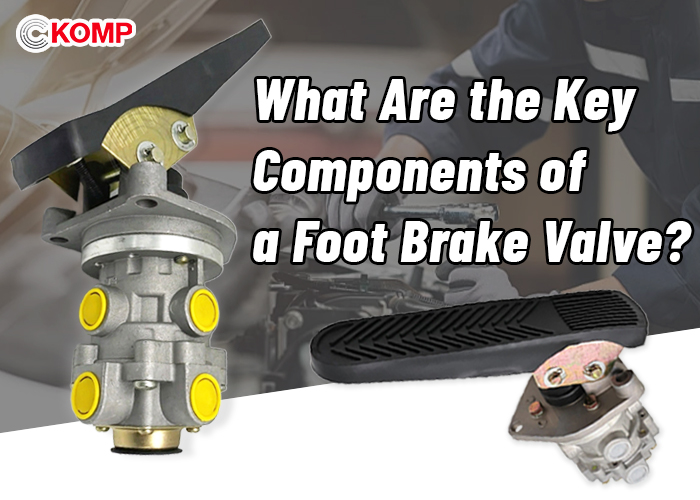
The valve body is the rigid housing that aligns every internal part, usually cast from aluminum or steel and drilled with supply, delivery, and exhaust ports. Supply ports take compressed air from the primary and secondary reservoirs; delivery ports send metered air to relay valves and brake chambers; the exhaust port vents trapped air on release. The body shields internal bores from dirt, moisture, and vibration; scoring, pitting, or cracked threads call for replacement.
Stepping on the treadle pushes the plunger downward through the pedal linkage. The plunger transfers force through a rubber graduating spring that gives pedal feel and graduated braking rather than an all-or-nothing switch. It compresses gradually with travel, so a light press gives low pressure and a firm press higher pressure. A hardened, swollen, or collapsed spring causes spongy feel, brake lag, or uneven application.
Modern heavy vehicles use a dual-circuit design, so the valve body holds two independent sections in one housing. The primary section is pushed directly by the plunger; the secondary is normally driven pneumatically by primary delivery pressure, with a mechanical backup if the primary circuit fails. Each piston slides in its own bore and balances pedal force against delivery pressure. When upward pneumatic force equals downward spring force, the valve holds: both inlet and exhaust stay closed and pressure stays steady.
The inlet valve lets reservoir air enter the delivery circuit. Pressing the pedal closes the exhaust seat and opens the inlet valve, sending high-pressure air to the brake system. Inlet valves seal on rubber seats; over time heat, moisture, and fine carbon grit can harden or score the sealing lip. A leaking inlet valve produces a steady exhaust hiss even when the pedal is released, because supply air bypasses the vent path.
On release, the inlet closes and the exhaust opens. Chamber and line air flows back through the exhaust passage and escapes to atmosphere, releasing the brakes. The exhaust seat and its O-ring must seal tightly under application; a damaged seat or bypassing piston O-ring causes a hiss only while the pedal is held down. A restricted exhaust passage or sticky plunger can slow release and leave light brake drag, building heat on long descents.
Every moving interface in the valve relies on rubber seals: piston O-rings, body gaskets, circuit isolation rings, and backup rings. These keep primary and secondary air separate, prevent external leakage at the mounting flange, and stop supply air crossing between chambers. If an isolation seal ruptures, pressure can migrate between circuits, changing front-to-rear brake timing and creating imbalance. Most rebuild kits replace these soft parts, but only when the bores are clean and unscored.
Return springs push the plunger and piston back to rest when pedal force drops. Retaining rings, snap rings, and washers hold the stack together under repeated cycling. The mounting gasket seals the valve base against the firewall or mounting bracket; a floor-plate leak often points to this gasket rather than an internal fault. Use only silicone or barium-based grease on rubber parts, because petroleum grease swells O-rings and shortens seal life.

No.19 Xianghui Road, Jiujiang District. WUHU, ANHUI, CHINA
Tel : +86-13505531663
Whatsapp : +86 13505531663
Email : Andy@compass-autoparts.com